Sunday, November 18, 2012

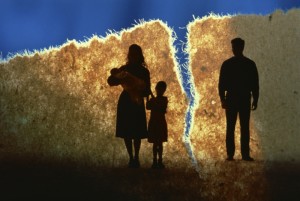
Divorce is the New Death (Divorce Pt.3/final)


In my last post we explored relationships that start poorly and how they lead to troubled marriages. We use as a sort of case study the story of the love triangle that is Abram, Sarai, and Hagar's relationship (found in Genesis). We pick up the story where we left off, as we see their home become a war zone which leads to a final split.

Everything seems to be going fine until Abram and Hagar actually conceive a child.  Then the very point of tension floods to the surface. Hagar's pregnancy highlights Sarai's barrenness.  Sarai is afraid that Hagar will take her place as Abram's primary choice.  Thus, she determines to make life miserable for Hagar.  Notice that all the mistreatment towards Hagar comes from Sarai.  Sarai blames Abram for the for the uncomfortable situation, but Abram's reply to Sarai is to “Do with her whatever you think best” (Gen. 16:6b NIV).  When the harassment ensues Abram tries to remain aloof.  I believe that in this Abram actually expresses a sort of passive affection toward Hagar.  He cares too much for her to join in the abuse.  Nevertheless, the homestead has become a war zone.

Maybe we can't relate to this particular context, yet anyone who has experienced divorce will understand what it's like for a home to become a war zone.  It's a war fought with words hurled back and forth with cursing, yelling, insults, lies, half truths, screaming, arguments, threats, and other verbal weapons of mass destruction.  There are even physical wars which include fist fights, rape, stabbings, and shootings.  Then, worst yet, are the “Cold Wars.”  These are wars of silence and espionage.  No words are exchanged...at all.  No affection.  No smiles.  No love.  All the while both sides stockpile weapons waiting on the other side to strike first so that they might have good reason to unleash a full-scale assault.  Without a peace treaty or some other form of intervention these types of conflicts can only end one way...carnage, destruction, and death

Hagar's response was typical.  She left.  She did what anyone else would do.  It's only a matter of time in the course of war before one side to simply retreats. When one person leaves the problems can no longer be avoided or concealed.  Now it becomes public knowledge that there are major problems with the marriage.  And usually, by the time a person leaves the relationship is pass repair.  Now there are times when the marriage can be salvaged after a separation, but these instances are the exception; not the rule.

It's in these moments of brokenness and loss that we begin to recognize our deep need for counsel and strength.  Whereas, we might not know how to move forward, we know for sure we don't want go back to the way things were. Sad to say that this level of brokenness is what it often takes for God to get through to us.  Maybe this is when I'll start going back to church, or go seek counseling, or call the pastor for special prayer and spiritual support.  It's right at this extremely low point that God shows up and gives great encouragement. The angel of the Lord comes to Hagar and convinces her to return home.  In addition he tacks onto the command a number of promises relating to the well-being of her son.

Hagar is convinced.  So she goes back to Abram.  And isn't this how it works? You're convinced that things can work out.  God can do anything.  He can turn things around.  He can help us patch things up.  We'll get counseling.  We'll start spending more time together; start talking more, and stop all the fighting.  We can work it out.

Hagar goes home and Ishmael is born.  And all of sudden, the stakes are much higher.  There's more at risk now because this newborn baby imbibes everything that makes up the home environment.  It's amazing the things they are able to pick up on too.  We think that we are shielding them from certain things, yet they're much sharper and observant than we like to give them credit for.  They hear the late night arguments.  They know when we're angry with each other.  The problem is that the vast majority of their understanding of life, themselves, the world, and God is developed from their relation with mom and dad and the relationship that they witness between them.  Therefore, the emotional and relational instability in the home has earthshaking implications for the children. To see mom and dad breaking up means that their world is crumbling apart.

Ishmael is able to grow and develop in close relation with his dad Abram (now known as Abraham), and they have a number of good years, but after Ishmael turns thirteen everything changes (see Gen. 17).  This is about the time that Abraham's wife Sarai (now Sarah) is promised that she will give birth to a son.  The following year she finally becomes pregnant and gives birth to a son—Isaac.  Instead of focusing on the long-awaited, elusive blessing of her newborn baby, she turns her attention (once again) to her supposed threat and demands that Ishmael and Hagar be sent away for good (see Gen. 21).

It turns out that as much as things change, things stay the same.  Hagar came back but the situation never really changed.  There was still tension and fighting.  They were still distrustful and manipulative towards each other.  This is not going to work out.  We gave it a second shot and it's clear that you will never change.  Maybe you can change, but I cannot wait for you to change and it's not my job to change you. I think it's just best that we go our separate ways.  Sound familiar?

I wonder how it must have felt for Abraham to pack that final care package and watch his son and his “wife” walk off into the horizon.  The Bible does make it crystal clear that “the matter distressed Abraham greatly because it concerned his son” (Gen. 21:11 NIV).  He didn't want to lose his son.  I'm sure he had watched Sarah and Hagar fighting, manipulating, and manipulating so much that he knew something had to give before the two of them tore each other apart.  Yet, he loved his son Ishmael deeply.  He had prayed that God would extend His blessing over Ishmael as well as Isaac (see Gen. 17:18).  He wanted the best for his son and he couldn't bear the thought of losing him and expecting his mother to care for him on her own. 

And let's be careful not to short change the significance of the relationship that he shared with Hagar.  It is rare that you meet a man who wishes ill-will on the mother of his children.  I'm sure they exist, but it's like finding shark teeth on the beach—that's not something you see everyday.  Besides these two have shared meaningful, loving exchanges for nearly fifteen years.  They laughed, cried, and smiled together.  They have a real bond.  This is a loss.  And on top of that he is losing a faithful servant from his household.  This is a loss—a big loss.

This isn't fair.  This is painful.  This is divorce.  It is hurt.  It is brokenness.  It is loss.

Speaking of loss, when we talk about divorce we always talk about the spiritual, relational, and emotional brokenness, but what about the financial loss and even vocational loss.  Divorce demands breaking up and splitting up the stuff: the house, the cars, the alimony, child support, with court costs and lawyer fees ad-nauseam.  So after the smoke clears and the dust settles I'm not only broken, but I'm also broke. 

Man, this hurts.  This is divorce.  Divorce is the new death.

Thursday, November 15, 2012

How the Drama Starts (Divorce Pt.2)


DISCLAIMER: All marriage relationships are different. Therefore, it is not my intention to generalize any one person's circumstances. My goal here is to explore common issues and concepts that affect many marriages. By looking at biblical characters with similar circumstances I try to draw parallels to our own experience and find principles that we can apply to our own lives. I pray that you are enriched. If you are currently experiencing a divorce or separation I pray for God's richest manifestations of healing and restoration over you and your family. God bless.


Now Sarai, Abram’s wife, had borne him no children. But she had an Egyptian slave named Hagar; so she said to Abram, “The Lord has kept me from having children. Go, sleep with my slave; perhaps I can build a family through her.” Abram agreed to what Sarai said. So after Abram had been living in Canaan ten years, Sarai his wife took her Egyptian slave Hagar and gave her to her husband to be his wife. He slept with Hagar, and she conceived. When she knew she was pregnant, she began to despise her mistress. Then Sarai said to Abram, “You are responsible for the wrong I am suffering. I put my slave in your arms, and now that she knows she is pregnant, she despises me. May the Lord judge between you and me.” “Your slave is in your hands,” Abram said. “Do with her whatever you think best.” Then Sarai mistreated Hagar; so she fled from her. The angel of the Lord found Hagar near a spring in the desert; it was the spring that is beside the road to Shur. And he said, “Hagar, slave of Sarai, where have you come from, and where are you going?” “I’m running away from my mistress Sarai,” she answered. Then the angel of the Lord told her, “Go back to your mistress and submit to her.” The angel added, “I will increase your descendants so much that they will be too numerous to count.” (Gen. 16:1-10 NIV)

Now I already know what you're thinking, “Abram and Hagar weren't really married! God never blessed that relationship.”  While I understand and sympathize with the rationale, I think that the issue is a bit more complex than we like to make it.  So just indulge me here, and please note that the text actually says that Sarai gave Hagar “to her husband to be his wife” (Gen. 16:3 NIV).  There was no other social construct to describe such a relationship of long-term domestic partnership that included conceiving, bearing, and rearing children.  Albeit misdirected and ill-advised, it was indeed a marital relationship.

I actually agree with you.  This whole thing with Abram and Hagar was never God's plan.  And this thing was doomed to fail from the beginning.  However, let's not overlook the fact that polygamy was the norm in that time and society.  But we also have to consider what it was that they were trying to accomplish.  This was not a simplistic attempt to keep in step with societal norms.  This was a ploy in the mind of his wife (Sarai) to help bring about God's will according by their own means.  And for that reason it was doomed before it even got started.

But let's face it, a lot of marriages start just like Abram and Hagar's did.  We overlooked a glaring flaw or tried to ignore a major red flag.  You knew he had major control issues.  You knew she was self-centered and materialistic.  Yet, you moved in together anyway reasoning that "everybody test drives before they buy."  And after the wedding, red flags turn into real problems.  In other words, what was easy to overlook in the dating stage is not so easy to ignore after the vows because marriage has brought us too close to really hide character flaws and inconsistencies.  Even some of the things that were thought to be cute are suddenly annoying as time goes by, so surely the weak points of character will begin to weigh on the relationship.

Then, there were those parents and mentors who tried to counsel us against getting married.  They said we're too young, we should wait, we should get counseling, we should finish school first, we should get a job and save some money, but we didn't listen to counsel because we knew we were in love and we could make it work.  Boy were we in for a rude awakening?  We had no idea that it would be this hard.  It's amazing how problems don't just go away if you "just drop the issue."  They just fester, spoil, and get worse and worse.

Tuesday, November 13, 2012

The Big "D"


My wife and I spent the bulk of last year praying for marriages and families.  Most of our prayers were directed towards three couples in particular.  These three couples were people that we really love and look up to.  One couple was one she grew up seeing.  Another was one I grew up around.  And the third was one that we both came to know as adults.  They've each been married for as long as we can remember, and so these are the type of couples that when you think of a good marriage...these people come to mind.  They were models for us.

I do have good news...we did pray a whole lot.

As for the marriages...not so good.

All three of them ended in divorce.

Divorce has devastating implications for community as well as for the couple.  We could spend all day and all night talking about how the local community is negatively impacted by a splintered family.

I think about the couples that I know and love.  Having been raised in a single parent home I learned to revere married couples.  I romanticized the marriage relationship; seeing it as a sort of holy grail or sacred treasure to be sought after and attained.  These super couples became my idols or at least models of what a family should look like.  You want to do it right, and these couples indirectly train you on how it ought to work. 

The community draws strength and encouragement and hope for their own future that they too can live “happily ever after.” The community is warmed by their affection for each other.  Onlookers search for the security displayed in the support and fidelity they share.  Passers-by are impressed by the idyllic sweetness of joyful exchanges between parents and their children.  It's a beautiful sight to behold.  And then the unthinkable happens. 

Our community's bastion of hope and sweetness is obliterated by legal papers, court hearings, litigation, and court rulings.  But these aren't the people that actually really matter when the judge's gavel strikes the sound block.  It's the family itself: the extended family, the married couple, and the children that suffer the most.

For many people in our society marriage is almost a joke. News reports and gossip columns are riddled with countless stories of matchstick marriages.  People are beginning to lose faith in the sanctity of marriage.  Nevertheless, no one gets married with the intent to get divorced.  There is always an amazing and wistful story that they're able to tell about when they first met.  They were head over heels; thinking about each other at every waking moment.  Phone calls, love letters, emails, late night conversations, long dates, and tons of other memories filled the love bank until they determined to cash in for joint accounts.  

And then everybody remembers their wedding.  Just a few weeks ago I attended my cousin's wedding.  I was so proud of him.  He stood there with his tuxedo and white tie and pledged his love to his long time girlfriend.  You should've seen this guy when we were getting dressed.  He was so nervous, you would think he was going to the electric chair.  Funny thing is, as we journeyed up the stairwell from the basement of the church, his best man made the echoing cry, “Dead man walking!”  We all laughed.  He stood there and recited his own vows in front of all those people.  He was so nervous.  I was nervous for him.  It made me remember my own wedding.

I was trying to smile as I saw my bride walking down that center aisle.  I was so happy, and she was so beautiful.  Again, I tried to smile, but I couldn't stop my lips from quivering.  My lips were quivering. My legs were shaking.  I was as nervous as a six year old in a stage play. 

No one stands at the altar planning to construct the nastiest divorce story ever told.  No one schemes about breaking the heart of the one they love while lighting the unity candle.  People plan to live happily ever after.  I suppose that's what makes the wedding so nerve-racking.  It's not the wedding we're nervous about; it's the marriage.  In the back of our mind we worry, “What if I don't measure up? What if it doesn't work out?  What if we fail?”

I suppose it's fitting to take a commercial here and point out that the average US wedding today costs over $27,000 dollars.  That's enough money to buy a really nice pre-owned Mercedes, pay off a student loan debt, or put a down payment on a very nice home! With people spending all this money on getting married it begs the question of how much money they're willing to spend to stay married.  In other words, we have to start teaching young people to invest a fortune in their future marriage more-so than their wedding ceremony.

Nevertheless, we had the big ceremony, and after that...life happened.  We were focused on our careers, we had kids, took out a couple car loans, bought a house, our dog had puppies, she went back to school to get another degree, and somewhere along the way we lost touch.  Isn't that how it goes?  It's something like that.  Maybe not quite in that order, but in the midst of all the obstacles that life throws at you the marriage becomes a circumstantial appendage rather than the centerpiece of the life experience.

It doesn't take long for a person's true self to surface in the marriage relationship.  Or should I say, weaknesses.  In courtship a person puts their best foot forward with the intent to knock the significant other off their feet.  But in marriage, the goal of winning her love has (in actuality) already been reached, so the game changes.  Romantic love becomes secondary to getting promoted, making partner, and paying bills.  Thus a person's shortcomings rise to the surface of visibility, and often can become so glaring in the absence of past romantic escapades that it can serve a major shock to the newlyweds.

The tension mounts, but how do you fix it?  I barely know how to change a tire, or balance a budget.  How do you fix a marriage?  On top of that, the tools aren't immediately available.  Meanwhile, life is happening and the marriage gets put on the back-burner.  Before you know it, years have passed since we slept together.  I was just too busy with work and getting the kids back and forth to school to acknowledge how bad it was. In many cases it's apparent that for a couple who splits; they were single long before they got divorced.

Wednesday, November 7, 2012

A Necessary Violence

Disclaimer: What follows was written over two years ago. After preaching tonight I was approached about the subject and offered to share this for further insight. I thought the subject matter relevant to the ideas of this blog and thus, here it is. "A Necessary Violence" I hope it serves as a means of insight and inspiration. 

From the time John preached his message until this very day the Kingdom of heaven has suffered violent attacks, and violent men try to seize it.
-Matthew 11:12 (TEV)
 
I love animals.  I especially love large animals.  Large birds, bears, big cats like: lions, tigers, and panthers.  I like elephants, giraffes, and the other herbivorous large animals, but I especially enjoy watching the large carnivores.  I enjoy watching them hunt.  They are so artful, crafty, and swift for their size, it’s almost unbelievable to see them catch their prey.
 
There are many creationists (Christian scientists) who believe that there was a time when Lions and other carnivores ate no meat.  They suggest that there was a crucial point in history long ago where there was a major shift in the natural order of things.  They suggest that it was after Adam and Eve sinned.  Still others may even suggest that it wasn’t until after the great global flood found in Genesis.  Nevertheless, they are now skillful hunters and cold-blooded killers.

And that’s where the rubber meets the road because they aren’t necessarily cold-blooded (in all actuality, many of them are warm-blooded (sorry, couldn’t help myself).  They don’t kill for the sheer pleasure of killing, as some do.  They kill to eat.  And they eat to live.  They reason, “In order for me to live, somebody’s got to die.”  Theirs is a necessary violence.
 
And so they hunt.  Masterfully, artfully, carefully, cunningly stalking their prey.  Grading and calculating which way they will have to run, how they will have to strike, and at what exact moment, all with matchless precision.
 
In the above verse, Jesus is (once again) making one of those statements that make you scratch your head.  He uses such strong language, and words that He uses only this one time to describe the Kingdom of God.  Nevertheless, He speaks of these seemingly negative traits as if they are positives—necessary (if you will).
 
He first qualifies his statement saying, “From the time John came on the scene and did his thing until now…” as if He is inviting us to get on the bandwagon with something new that’s happening.  Keep and mind that Jesus and John the Baptist were cousins, and they were only about 6 months apart in age.  John’s mother (Elizabeth) was pregnant with him when Mary first realized she was pregnant too (see Lk. 1:26-45).  He (John) began his ministry not long before Jesus began His.  They ministered during the same time period and their ministries overlapped.  When John was ending his ministry, Jesus was beginning His.  And all of this had happened fairly recently.
 
Now Jesus says, “This is something new that’s happening, and you want to get in on the bottom level.  Act now.  This offer will not last long. Call now while supplies last!”
 
Now we know that this is something positive because in the previous two verses Jesus gives a short and serious expression of how He sees the life and ministry of John the Baptist.  He says, “John is the man to whom the Scriptures refer when they say, `Look, I am sending my messenger before you, and he will prepare your way before you. I assure you, of all who have ever lived, none is greater than John the Baptist” (Mt. 11:10-11a).  So right here in the text Jesus says that, “John’s ministry was important and powerful.  He was anointed to prepare people to receive Me and my ministry, and there’s not another man who has ever lived who is greater than John.”  Now Jesus was obviously not talking about John as a person; being compared to other people in general, but rather of his one-of-a-kind opportunity to prepare the way for (and present) the Messiah.  No one else had that awesome privilege and thus he is the greatest (to prophesy of the coming King).  Nevertheless, he did his part in the plan so masterfully and honorably that it added to his greatness.
 
And thus Jesus says, “John was great! So great that he started a trend.”  Now I am not a trendy person.  Frankly, I’m not much into trends at all.  It’s my personal opinion that trends can often signal what’s wrong in the world rather than what’s right.  So I largely, generally avoid them.  I realize that sometimes it can be considered foolish (or even bad) to avoid certain trends because there are ones that lead us to greater effectiveness and productivity.  I admit that that’s just the way I am. I’m working on that.  In this case, Jesus suggests that it’s foolish, possibly even bad to avoid this trend.
 
He says, “Ever since John came preaching until this very moment the Kingdom of heaven now suffers violent attacks…”
 
Try hard to contain and control your astonishment.  “…the Kingdom of Heaven suffers violent attacks…”  It is the only place in the entire Bible where this phrase (“suffers violence”) is used.  Now some would suggest it is the Kingdom of Heaven that promotes violence or “expands violently” but that is not the case as Jesus describes it.  Everything in the verse is happening to the Kingdom of Heaven.  The Kingdom is on the receiving end.  It doesn’t really make sense for an entire kingdom to be violent but then be (successfully) attacked, overthrown, taken-over by a few violent people.  No.  The Kingdom is passive.  And ever since John came people have had this insatiable thirst to attack and even take the kingdom.
 
Talk about a hostile take-over?!  This is what John started.  This is who John was.  John was hostile towards the order of things.  John was dissatisfied with the way things were.  John hated it that the temple was being used as the federal reserve bank of the greedy priests. John hated it that the scribes and Pharisees used their knowledge of the law to keep the blue-collar shepherd, peasant, factory-worker oppressed under pointless policies.  John hated it that the people of God were supposed to be the rulers of the land they inhabited yet they were being imprisoned by another country’s foreign policy and police force.  John hated it that the people who were supposed to be serving as Israel’s spiritual leaders were being pimped by petty politicians ploying to protect their own positions.  John was dissatisfied with the way things were.  
 
And so John resorted to drastic—violent measures.  He moved out of the city and into the country.  He got rid of his linen shirts and Gucci robes and started wrapping himself in burlap sacks and animal skins.  He pushed aside the tilapia and halibut and started eating grasshoppers and wild honey. He spoke truth to power and didn’t care if they wanted to hear it or not.  His sermons were straight and to the point and he didn’t pay attention to opinion polls.  John hated injustice, immorality, hypocrisy, and the like.  This brother had a hostile, violent attitude.  That’s the way he lived his life, and that’s the way he served God.  
 
He was on an all-out, vicious attack and God’s Kingdom was his target.  God’s approval was his goal, and the evil workings of Satan were his only obstacle.  He was a violent man of God, on a violent mission for God, with a violent word from God, doing the violent work of God, in preparation for the violent Son of God.
 
Now get this.  In verses 13 and 14, Jesus said (and I’m paraphrasing) that, “the law and all the prophets did their part up until John, but John was special.  If you guys would have really listened to him John was the present-day Elijah.”  Now what’s this about Elijah?  Elijah was another violent brother.  And his was a necessary violence (see 1 Ki. 17).
 
Elijah began his ministry as a prophet during a time of great wickedness and rebellion against God.  The people of God were constantly fighting, betraying, backbiting, plotting, and scheming against each other.  And the kings were at the center of all the mess.  They were so busy trying to position themselves favorably with other countries and with the people (in order to remain in power) that they had completely lost sight of their responsibility to ensure the people’s faithfulness to the will of God.  The kings built temples, altars, and idols specifically designed to worship other gods as a means to find favor with other people groups and placate the people’s unholy alliances.  
 
Jeroboam was a terribly wicked king.  He rebelled against the established government and set up his own kingdom in the north.  He then set up new worship centers so that the people didn’t even have to go down south for camp-meeting.  The problem was he established these two new churches around two golden calves. Sound familiar?  Yeah, the same exact image that made Moses break the two tablets of stone with the ten commandments on them. Then Jeroboam hired some gangsters to be the priests and pastors for his new churches.  Not only that but even after Jeroboam was crippled and the Lord destroyed one of his altars he still expanded the kingdom’s idol worship further. This brother was so wicked that every wicked king who came after was called “One of Jeroboam’s boys.”  He was the poster-boy for wicked leadership
 
Then, five kings and about 50 yrs later there was king Omri.  This brother was so evil that the Bibles says that he worse than all the other kings before him (1 Ki. 16:25).  In the very next verse the Bible is careful to mention that he was just like Jeroboam only much worse.  Then Omri had a son named Ahab.  And Ahab became king.  Then the Bible says that this brother was so evil he made Jeroboam look like an imposter (see 1 Ki. 16:30-31).
 
Enter Elijah, the man God used to turn the people’s attention back to the true God.  This was a violent brother.  He immediately bursts on the scene and proclaims, “There ain’t gon’ be no rain, sleet, sleet, snow, hail, dew, or any other thing that even remotely resembles water falling from the sky until I say so.”  Ever meet somebody with serious crowd control?  This brother has crowd control.  But not only that, this brother has cloud control. He is standing in front of the king of all of Israel and he’s calling the shots and giving the orders.  It’s a “nobody move; nobody get hurt” sorta thing.  This is a violent statement.
 
Now you’ve got to realize that Elijah said there won’t be any rain for the next few years so that obviously means that there will be a drought.  Which also means there will be a famine.  Because without irrigation the crops can’t grow.  And notice the drought and famine had to reach more than 80 miles north of Samaria because he meets a Phoenician widow in the same chapter who is feeling the burden of barrenness.
 
So then fast forward a little bit to chapter 18 where Ahab and Elijah meet for the second time face to face.  “Are you the one who’s been causin’ all this trouble in my kingdom?”  This is a classic punk move!  Ahab knows exactly who Elijah is because Elijah told Ahab to his face that it wasn’t gonna rain.  But at this point he’s a bit intimidated by Elijah because everything has happened just as he said it would. And the fearless, violent Elijah looks him square in the eyes and says, “I’m not causin’ the trouble. It’s you and your daddy who’s caused all the trouble. You wanna take this outside?”  And so the stage is set when he challenges Ahab to bring all of his false prophets to Mt. Carmel for a showdown.  And whoever’s god responds by consuming their offering with fire is the true God.  
 
So there stands Elijah by himself on the side of God with 400 prophets to the false god Baal on the other side.  Elijah is outnumbered yet unafraid.  The rules for this old-fashioned face-off are very simple.  Each side is gonna cut up a bull and lay it on the altar and pray for their god to respond by sending down fire from the sky to eat up the offering.   Elijah turns to the large crowd that showed up to see the showdown and he says, “How long are ya’ll gonna keep playing with God? Ya’ll need to make up your minds who you’re gonna serve. If Baal is god then serve him. If God is God serve Him.”  He then turns to the prophets of Baal and says do your thing.  
 
Baal’s prophets screamed cried and even cut themselves with knives all day until (finally) they gave up.  Elijah steps up and commands that the altar of God be soaked with water.  He made it so that the people knew beyond the shadow of a doubt that, “this is going to require a supernatural display of power in order to burn that animal.”  Well, after Elijah prayed not only was the animal burned up, but the wood, the stones, and the water that had drained down into the trenches around the altar had all been sucked up by the heavenly flames.
 
Immediately, those people who had been too scared to stand for God just a few hours earlier were all kneeling and worshipping before the true God.  Then Elijah turned toward the 400 prophets of Baal and ordered that they all be killed on the spot.  Can you imagine how much blood was spilled on the top of that mountain?  I tell you that Elijah was a violent brother.
 
Are you beginning to see the connection?  I don’t want you to get it mixed up.  John and Elijah’s violence was against evil not against people.  The violence I’m talking about is a violence against evil not against people. Some of us are more violent against people than we are against evil.  We take it literal when Elijah killed those 400 prophets of Baal and we start looking for the people who are not serving God so that they can run ‘em through with a knife.  That’s exactly what we do to people e who struggling in their faith.  We often kick ‘em when they’re down.  No .  But rather, I‘m suggesting that those 400 prophets are the 400 channels on Direct TV that try to steal the time that I could be serving God and pour it down the drain.
 
I’m talking about a necessary violence.  They say if you keep on doing what you’ve always done, you’ll keep on getting what you’ve always got.  And I don’t know about you but I’m sick of evil.  I’m sick of sin.  I’m sick of inconsistency.  I’m sick of unfaithfulness.  I’m sick of a lack of commitment.  I’m sick of addiction.  I’m sick of gossip.  I’m sick of lying and cheating.  I’m sick of scheming.  I’m sick of broken promises.  I’m sick of betrayal.  I’m sick spiritualism. I’m sick of witchcraft.  I’m sick of murder.  I’m sick of adultery.  I’m sick of sexual immorality.  I’m sick of pornography.  I’m sick of hypocrisy.  I’m sick of pride.  I’m sick of false doctrine.  I’m sick of hatred.  I’m sick of drug abuse.  I’m sick of evil in all of its forms,   and I’m feeling a little violent right now.
 
They say the most dangerous animals are wounded animals.  They will do anything to protect themselves from suffering further harm.  Well call me a wounded animal because I’m feeling a little violent right now.
 
As a matter of fact I’m about to get real violent. But keep in mind this violence is against evil not against people.  Oh but you best believe I’m still about to get real violent.  Now remember Paul said the weapons of our warfare are not carnal but mighty through God for the pulling down of strongholds (2 Cor. 10:4).  Yeah so I got some weapons.  I got me a bullet proof vest called righteousness.  I got me a helmet called salvation.  I got me a shield called faith.  And I like the offensive weapons.  I got me a sword called the word of God.  And Paul was old-school, but I think if he were alive today he would’ve said that you need a gun.  I got me a gun it’s called prayer and fasting.  I got some weapons, and I’m about to get real violent.
 
I’m about to get violent with bible studies.  I’m about to get violent with fervent intercessory prayer for the lost.  I’m about to get violent with community service.  I’m about to get violent by being kind to people who don’t even deserve it.  I’m about to get violent with outreach.  I’m about to get violent in faithfulness to the mission of the church.  I’m about to get violent with witnessing and sharing my faith.  I’m about to get violent and turn off the TV for a change.  I’m about to get violent and have family worship.  I’m about to get violent and visit the sick. I’m about to get violent in serving the Lord.
 
Desperate times call for desperate measures; and these are desperate times.
 
Now keep in mind.  If you are hurting people then God is not pleased.  And a lot of people like to say, “Well the truth hurts.”  Yes the truth does hurt, but are you the type of person that people prefer to hear the hard truth from?  If nobody wants to be around you, nobody wants to listen to you, nobody wants to hear what you got to say, babies don’t like you, kids run away from you, there must be something wrong.    
 
Now remember the text.   Jesus said, “John was Elijah….” (Mt. 11:14).  And remember it was Elijah mission to turn the people’s attention back to God.  And that’s exactly what John did.  John was spiritually violent, but his entire focus was to point the people to the the most violent man who ever lived—Jesus Christ.  It’s very fitting that Jesus is the one who makes this statement because He knows what spiritual violence is—He created the idea.  It was a very violent move to give up his kingdom and be born as a poor peasant human on planet earth.  It was a very violent move to fast for forty days and forty nights in the wilderness.  It was a very violent move to preach and teach the truth in the presence of people who wanted to kill Him. It was a very violent move to give sight to the blind, strength to the crippled, and life to those who were lying in their graves.  John said that “Jesus came to destroy the works of devil” (1 Jn. 3:8).  And his methods were very violent.
 
And if all that weren’t enough, He was betrayed, and denied by His own disciples, accused by liars in a kangaroo court, condemned by a heathen politician, and the whole time “He stood as Lamb before the slaughter…and He opened not His mouth (Is. 53:7).  I wish I were there because I would have leaned over to him and said, “Now’’s a good time to say that thing again…’Thing of heaven suffereth violence, and the violent take it by force.’”  He dragged His own cross to the top of a mountain, and allowed these dirty, grimy, sinful, men to hammer spikes into his hands and feet.  Then he hangs there for hours and all he says is “Father forgive them for they know not what they do.”  This is a necessary violence.  
 
I told you before that those predators know that in order for them to live something else has to die.  Well, Jesus knew that in order for us to live, somebody had to die.  And this violent brother decided that that somebody would be Him.  He allowed them to take him down off the cross and lay Him in a borrowed tomb.  And see here’s the good part.  Jesus is teaching us what pulling down strongholds is all about.  Sometimes it takes drastic measure to bring about drastic change.  No one had ever raised themselves up from the dead.  
 
So when He comes bustin up out of that grave.  He stands as the victor over a violent, bloody, battle with death, sin, and Satan.  And he stood there at the mouth of that tomb saying, “Oh death where is thy sting, oh grave where is thy victory!” (1 Cor. 15:55).  I told you Jesus is a very violent brother.  And His is a necessary violence.

Monday, November 5, 2012

The Road Less Traveled

I intended to post something today about marriage and divorce, but I had to share this.

The passage is taken from the book Christ's Object Lessons by Ellen G. White. I obviously have an app that gives me access to all her writings. I just finished reading The Desire of Ages (...again), and since I was engrossed in reading what she wrote about the life of Christ, I thought I might as well go ahead and read what she wrote about the teachings of Christ. This isn't the first time that I've read this book, but I don't remember reading this.

This, for me, is one of those moments in my walk with God where He's talking, and I'm quietly listening. It's a long journey, and we've been walking for a long time and over a great distance. I've done lots of talking, and so has He. I've been very animated and excited at times. I am sure that I have often made Him smile, or maybe even laugh at times. I know there have been times when He's made me laugh. But at this moment the conversation just got real solemn. We're walking, He's talking, I'm listening. Mouth closed. Head down. Hands in pockets. Kicking a rock as I go, so that I have something to distract me even the least bit from the heart-seeking missiles of His words.

It just got real. I got it though...I think. If I could encapsulate the vast expanse of ideas in three simple points then they would probably be somewhere along these lines.

God requires:
1. That I would love people...because He loves them too.
2. That I never pursue or preserve reputation; rather integrity and divine purpose.
3. That I trust Him.

I stop for a minute because I want to speak, but in this moment, it's probably best not to. He's looking at me the entire time. I just keep my head down. I glance at Him, but I stare at the rock again. I need this rock. The rock helps me focus. Then I look up at the path ahead...we got a long way to go. Then I turn around and look...and truth is...we've really come a long way already. I'm cool though, because He's right here with me.

I sit down on a log and take some notes, because I wanna remember what He said. He says He'll remind me, but I take the notes anyhow.

I'm going to read this chapter again soon.

I get back up, and we continue our journey.


Thursday, November 1, 2012

He's Never Coming Back??? (Sudden Death Pt. 3/Final)


I think I first started hating funerals when my brother died. That was a sad funeral. It was terribly sad. Fast forward twenty years, and there I am with complete disdain for funerals, yet officiating over the funeral of my own father. Sharhonda had filled in some of the details; a lot of which was breaking news to me. And as the weeks wore on, I slowly picked up bits and pieces of the story; complete with all types of fanciful details including a failed suicide attempt around Thanksgiving, a separation from his newlywed wife, court-ordered probation, anti-depressant medication, and then some.

I remember standing there as they closed the casket and comforting my family as they wound the casket bed down. I don't remember for sure but I think that the casket remained open during the duration of the service, but there was one final viewing at the end and then they closed the casket for good. I remember that it was taking a little longer than normal. It's an old pastor's tactic to comfort the family while the casket is being closed so that everyone isn't so laser-focused on the casket. When the casket closes there is this sense of finality for many people. But there I was; I had done all the greeting and comforting that I could possibly have done but they still hadn't finished closing it. There was this dark silent moment right then at the front of the sanctuary. Everybody's crying; and everything that my grandmother had been holding back just broke loose.

“He's never coming back!”

“He's never coming back!”

“He's never coming back!”

“He's never coming back!”

Over and over again; she kept repeating it. It was a paralyzing moment. Theoretically, theologically, I wanted to object and correct her reasoning, but this was not a moment made for philosophical discourse. This was a deep gut-wrenching cry for relief from excruciating emotional pain. This was grief in it's rawest, realest form. But that's when Jesus often shows up.

He touches the coffin and says in the most calm and assured tone, “Young man, I say to you, get up” (Lk. 7:14 NIV).

I've always been amazed by the voice of God. For He spoke, and it was done; He commanded, and it stood fast.” He “calls the things that are not, as though they were” (Ps. 33:9 NASB, Rom. 4:17b WEB) He created the entire world with His voice. Birds, trees, ocean, stars, fish, mountains, planets, and plant-bearing seeds: all with reverberating syllabic vocal intonations. And with that same voice He healed people, turned water into wine, quieted a raging sea squall, and now He intends to literally raise the dead.

The sound barely leaves His lips before it is accompanied by the very life-force that flows from the throne of The Almighty God of the Universe. This voice carried with it the electric energy of life deep into the dark caverns of the cold corpse, and before the most minute measurement of time might make itself manifest, life found it's place where it had so recently escaped and the young man began to speak.

I wonder what he said...

“What happened?...What's going on?...Mom?!”

The text says that, “Jesus gave him back to his mother.” This is what seems so unfair. This is why I can't argue with my grandma. In a sense she's right. Jesus is not present to deliver my dad back into her arms. Jesus was not there at my brother's funeral to bring my brother back to life. That's what stinks about death. It seems so final—so unfair. How is it that the widow get's her son back, but I don't get my dad back. How come I can't have my brother back?

Death makes the world seem totally out of synch. We all know we're going to die, but it's always bad timing when it's our turn. Nobody wants to die...well...more on that later. Yet, truthfully it's not in our nature to want to die. We want to live and thrive, and so when death comes, he is always an unwelcome guest. But thank God, God restores. He finds a way to restore life...in the ones we've lost. And in us after we have lost. God restores.